Category: Summer Vacation

  • Trip to the Maldives

    Trip to the Maldives

    Affiliate Disclosure: This post may contain affiliate links. If you click through and make a purchase, Holiday Royal Way may earn a small commission at no extra cost to you. Read our full Affiliate Disclosure →

    Planning a trip to the Maldives is one of the most exciting travel decisions you can make. This Indian Ocean archipelago of 1,192 coral islands scattered across 26 atolls is widely regarded as one of the most beautiful places on earth. Crystal-clear lagoons, overwater bungalows, house reefs teeming with marine life, and some of the finest resort hospitality in the world make a trip to the Maldives an experience unlike any other.

    trip to the maldives

    When to Plan Your Trip to the Maldives

    The timing of your trip to the Maldives can make a real difference to your experience. The dry season runs from November to April and represents the peak period, with calm seas, low humidity, and near-guaranteed sunshine. January and February are the prime months, offering brilliant visibility for diving and snorkelling. The wet season from May to October brings more cloud and occasional tropical downpours, but rainfall is usually short-lived and temperatures remain warm. The wet season also brings lower resort prices, often 30 to 40 percent cheaper, and far fewer tourists, which makes for a more tranquil and exclusive stay.

    Trip to the Maldives: Key Information

    FactorDetails
    Best time to visitNovember to April (dry season)
    Flight time from UKAround 10 to 11 hours to Male
    CurrencyMaldivian Rufiyaa (USD widely accepted)
    VisaFree 30-day on arrival for most nationalities
    Transfer optionsSeaplane, speedboat, or domestic flight
    Resort island budget£400 to £2,000 or more per night
    Local island budget£60 to £200 per night
    AlcoholResort islands and liveaboards only

    Where to Stay on Your Trip to the Maldives

    Accommodation is the biggest decision on any trip to the Maldives. Resort islands are the classic experience: each island is a single resort with overwater villas, private beach access, all-inclusive dining, and a full range of water sports. The experience is self-contained and deeply luxurious. Local islands, which have opened up to tourists since 2009, offer a very different kind of trip to the Maldives. Guesthouses on islands like Maafushi and Thulusdhoo let you experience local Maldivian culture, eat at restaurants serving fresh tuna curry for just a few pounds, and snorkel directly off the beach at a fraction of the cost of a resort stay. Liveaboard boats are the third option and are particularly popular with divers, as they cover more reefs and manta ray hotspots than any single resort.

    What to Do on a Trip to the Maldives

    The natural world is the main attraction on any trip to the Maldives. Snorkelling and scuba diving are spectacular throughout the archipelago, with manta rays, whale sharks, reef sharks, turtles, and vast coral gardens all on offer. The South Ari Atoll is one of the world's most reliable spots for whale shark encounters year-round. Sandbank excursions, a short boat ride to an uninhabited strip of white sand rising barely a metre above the sea, are quintessentially Maldivian and make for unforgettable photographs. Sunset dolphin cruises are another highlight, with pods of spinner dolphins common around most atolls in the evenings. Surfing is also increasingly popular on a trip to the Maldives, particularly at the breaks around Sultans and Chickens reef in the North Male Atoll.

    Getting There and Practical Tips

    All international flights arrive at Velana International Airport in Male. Getting to your resort requires a transfer: seaplane transfers are the most scenic and skim over the atolls at low altitude, though they only operate in daylight hours. Speedboat transfers are cheaper and available at all hours. Your resort will arrange all transfers once you have booked. A trip to the Maldives is truly bucket-list travel. From the moment you see that panorama of blue lagoons and palm-fringed islands stretching to the horizon, you will understand exactly why so many travellers say it is the most beautiful place they have ever been. Start planning your trip to the Maldives today.
    Further Reading

    Table of Contents

    • What to Do in Dubai in One Day

      What to Do in Dubai in One Day

      Affiliate Disclosure: This post may contain affiliate links. If you click through and make a purchase, Holiday Royal Way may earn a small commission at no extra cost to you. Read our full Affiliate Disclosure →

      Wondering what to do in Dubai in one day? Whether you have a long layover or are squeezing Dubai into a broader itinerary, one day in this extraordinary city is absolutely worth it. With the right plan, you can cover the iconic sights, sample outstanding food, and still be amazed by the sheer ambition of what has been built here in just a few decades. Here is exactly what to do in Dubai in one day, from first light to last call.

      what to do in dubai in one day

      What to Do in Dubai in One Day: Morning

      Start at the Burj Khalifa, the world's tallest building at 828 metres. Book the first observation deck slot of the day at around 8.30am to beat both the heat and the queues, and to catch the desert haze burning off. The view from levels 124 and 125 is extraordinary, stretching across the city, the desert, and the Persian Gulf all at once. Tickets cost around 35 pounds and should be booked online in advance. From there, step directly into Dubai Mall for breakfast. While you are there, look at the Dubai Aquarium, one of the world's largest indoor aquariums, and the stunning indoor waterfall sculpture. After breakfast, head outside for the Dubai Fountain show at the base of the Burj. Cross the footbridge to Souk Al Bahar for an Arabic coffee and a view of the Burj Khalifa reflecting in the lake below.

      Dubai One-Day Itinerary at a Glance

      TimeActivityLocationApprox. Cost
      8:30amBurj Khalifa observation deckDowntown Dubai£35
      9:30amBreakfast at Dubai MallDowntown Dubai£10-20
      10:30amDubai Fountain and Souk Al BaharDowntown DubaiFree
      12:00pmLunch at Al SeefDubai Creek£15-25
      2:00pmAl Fahidi historic districtBur DubaiFree
      3:00pmAbra crossing and Gold SoukDeiraUnder £1
      6:00pmDubai Marina walk and dinnerDubai Marina£25-50

      What to Do in Dubai in One Day: Afternoon

      Taxi to Al Seef on Dubai Creek for lunch in a more traditional setting. Try machboos, a spiced rice dish with chicken or fish, alongside fresh juice and Arabic coffee. After lunch, walk through Al Fahidi, Dubai's oldest surviving neighbourhood, where narrow lanes and traditional wind-tower architecture feel a world apart from the gleaming skyscrapers of Downtown. Visit the Dubai Museum for a quick overview of the emirate's transformation from pearl-diving village to global city. From Al Fahidi, take an abra, a traditional wooden boat, across Dubai Creek for less than a quarter of a pound. On the Deira side, explore the Gold Souk and the Spice Souk, where sacks of saffron, frankincense, dried limes, and rose petals fill the air with extraordinary fragrance.

      What to Do in Dubai in One Day: Evening

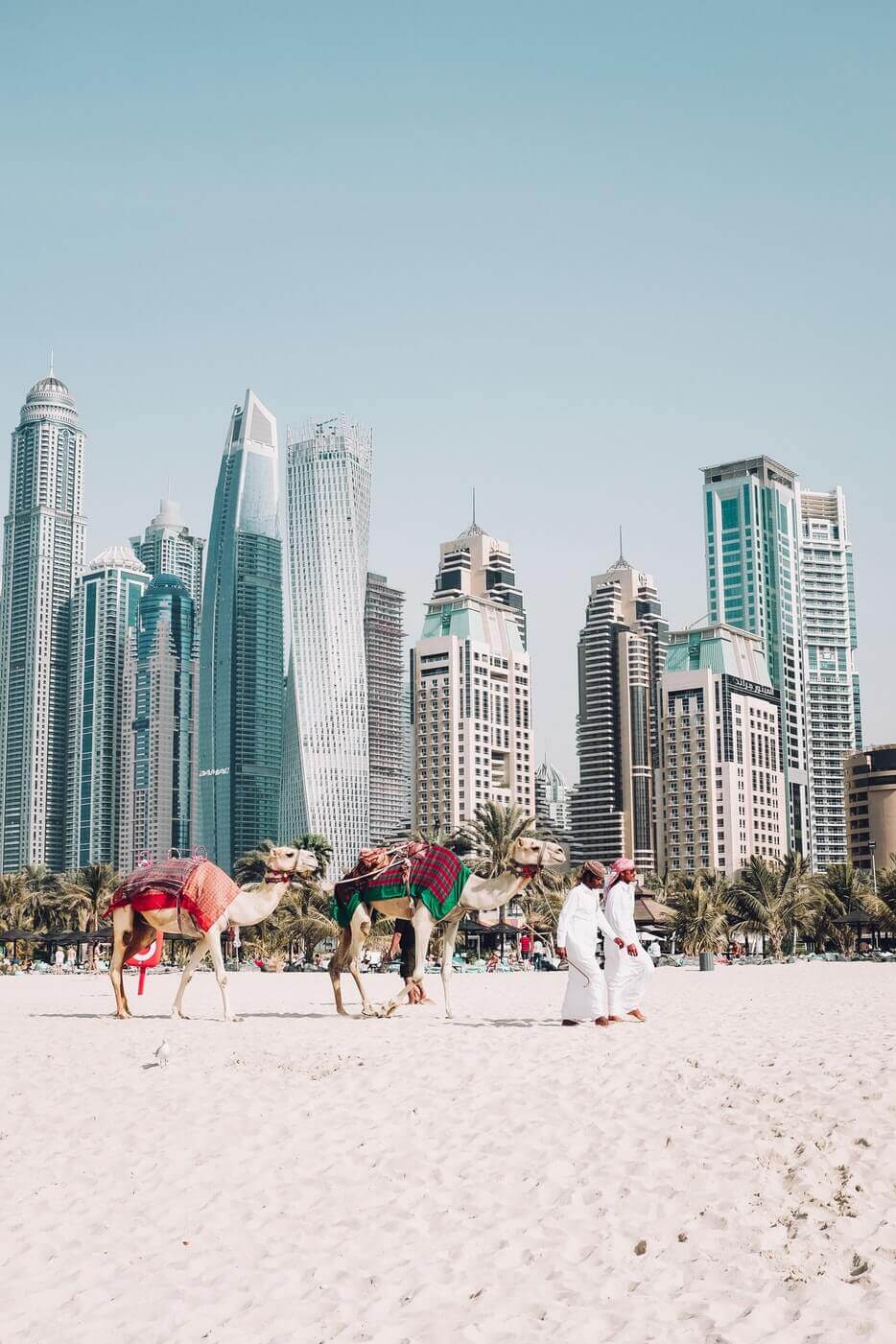
      For your evening, you have two strong choices when planning what to do in Dubai in one day. Option one: head to Dubai Marina and walk the pedestrianised promenade along the water, lined with restaurants and cafes. The view of the marina skyline at dusk is spectacular. Option two, which requires advance booking: a desert safari, with 4×4 dune bashing, camel riding, and a traditional Bedouin-style BBQ dinner under a canopy of stars. Both options get you back to the airport comfortably in time for a late-night connection.

      Practical Tips

      Getting around efficiently is key when you are planning what to do in Dubai in one day. Taxis and Uber are the fastest options between major sights. The metro works well along the airport, Downtown, and Marina corridor. Dress modestly when visiting souks and traditional areas. The best time to experience what to do in Dubai in one day is between October and April, when temperatures are a comfortable 20 to 28 degrees rather than the extreme summer heat above 40 degrees. A single day is enough to fall completely in love with Dubai, and most visitors find themselves planning a return trip before they have even boarded their flight home.

      Further Reading

      Table of Contents

      • Best Places in Sri Lanka

        Best Places in Sri Lanka

        Affiliate Disclosure: This post may contain affiliate links. If you click through and make a purchase, Holiday Royal Way may earn a small commission at no extra cost to you. Read our full Affiliate Disclosure →

        Everything you need to know about best places in sri lanka is right here – from top highlights to practical tips.

        Sri Lanka packs an extraordinary range of experiences into a relatively small island. Ancient kingdoms and UNESCO World Heritage Sites, a coastline with Indian Ocean beaches on multiple aspects, the mist-covered tea plantations of the central highlands, and wildlife — leopards, elephants, blue whales — that rivals Africa for accessibility. Once overlooked in favour of its larger neighbours, Sri Lanka has established itself as one of Asia’s most rewarding travel destinations, capable of satisfying culture-seekers, beach lovers, wildlife enthusiasts, and food travellers in a single trip.

        best places in sri lanka

        Best Places In Sri Lanka: The Cultural Triangle — Sigiriya, Anuradhapura, and Polonnaruwa

        Sri Lanka’s Cultural Triangle in the north-central region contains the island’s most dramatic ancient sites. Sigiriya — the Lion Rock — is the undisputed highlight: a 200-metre granite monolith topped by the ruins of a 5th-century palace-fortress, with frescoes painted onto the cliff face and water gardens at its base. The climb is steep but takes under an hour, and the views from the summit across the jungle plain are spectacular. Anuradhapura is Sri Lanka’s oldest city, a UNESCO site with ancient dagobas (stupas) the size of Egyptian pyramids, sacred Bodhi tree cuttings from Buddha’s original tree, and an atmosphere of genuine antiquity. Polonnaruwa, the medieval capital, has the most cohesive ancient cityscape and is arguably the most visitor-friendly of the three.

        Galle and Sri Lanka’s Southern Coast

        Galle, in the island’s southwest, is Sri Lanka’s most charming colonial city: a Dutch-built fort on a promontory, with ramparts walkable at sunset, streets of colonial merchants’ houses now repurposed as boutique hotels and cafes, and a lighthouse that’s become one of the island’s most photographed landmarks. The southern coast stretching east from Galle — Unawatuna, Mirissa, Tangalle, Arugam Bay — has some of Sri Lanka’s finest beaches, with surfing (Arugam Bay is world-class), whale watching (Mirissa, from November to April), and sea turtle nesting sites at Rekawa.

        Sri Lanka by Region

        RegionHighlightsBest ForBest Season
        Cultural Triangle (North-Central)Sigiriya, Anuradhapura, Polonnaruwa, Dambulla Cave TempleHistory, archaeologyYear-round (avoid April heat)
        Southern CoastGalle Fort, Mirissa beach, whale watching, surfingBeaches, watersports, cultureDecember–March
        Hill CountryKandy, Ella, Nuwara Eliya tea estates, Adam’s PeakScenery, trekking, tea tourismJanuary–April
        East CoastArugam Bay, Trincomalee, PassikudahSurfing, quieter beachesMay–September
        Safari ZonesYala (leopards), Udawalawe (elephants), Minneriya (elephant gathering)WildlifeJune–September (Yala), August–October (Minneriya)

        Kandy, Tea Country, and the Hill Country

        Kandy, Sri Lanka’s second city and cultural capital, is set around a central lake and home to the Temple of the Tooth — one of Buddhism’s most sacred sites, housing a relic of the Buddha. The city is the gateway to the hill country, best explored by the famous train journey from Kandy to Ella: six hours through tea estates, waterfalls, and cloud-wrapped hills, on what is regularly cited as one of the world’s most scenic rail journeys. Ella itself is a small hill town surrounded by tea plantations, with walking trails to Little Adam’s Peak and the Nine Arch Bridge — a colonial-era viaduct that’s become Sri Lanka’s most photographed image.

        Nuwara Eliya, higher still at 1,800 metres, was developed as a hill station by the British and retains a peculiarly English character: mock-Tudor hotels, a racecourse, and strawberry farms. The surrounding tea estates — many offering tours and tastings — produce some of the world’s finest Ceylon teas.

        Sri Lanka’s Wildlife and Safari Experiences

        Sri Lanka has one of the world’s highest densities of leopards in Yala National Park, making it one of the most reliable places on Earth to see the big cat in the wild. Udawalawe specialises in elephants — over 300 roam the park year-round, making sightings almost guaranteed. The Minneriya/Kaudulla tank area hosts the famous Elephant Gathering between July and October, when hundreds of elephants converge on the receding reservoir — one of Asia’s great wildlife spectacles. Offshore, blue whales and sperm whales pass Mirissa and Trincomalee in predictable seasonal windows, making Sri Lanka one of the world’s top cetacean-watching destinations.

        Sri Lanka is compact enough to cover meaningfully in two weeks — culture, coast, hills, and wildlife in a single itinerary. It’s an island that consistently over-delivers on expectation, and one that draws travellers back for a second visit more reliably than almost any other Asian destination.

        Further Reading

        Table of Contents

          Best Places In Sri Lanka — Final Thoughts

          Best places in sri lanka continues to attract visitors from around the world, and it is easy to understand why. Whether you are exploring best places in sri lanka for the first time or returning for another visit, there is always something new to discover. The best approach to best places in sri lanka is to plan ahead, stay flexible, and embrace every opportunity. If you are serious about making the most of best places in sri lanka, this guide has everything you need to get started.

        • The Most Exciting Way to Spend the Summer

          The Most Exciting Way to Spend the Summer

          Affiliate Disclosure: This post may contain affiliate links. If you click through and make a purchase, Holiday Royal Way may earn a small commission at no extra cost to you. Read our full Affiliate Disclosure →

          Looking for summer holiday ideas that go beyond the ordinary? The best summer holidays combine great weather, memorable experiences, and the right balance of adventure and relaxation. Whether you are travelling with family, as a couple, or solo, there has never been a better range of summer holiday ideas to choose from. Here are the destinations and experiences that should be on every traveller's radar this summer.

          summer holiday ideas

          The Best Summer Holiday Ideas by Destination

          The Mediterranean remains the undisputed favourite for summer holiday ideas, and for good reason. Croatia's Dalmatian Coast offers a winning combination of crystal-clear Adriatic water, medieval walled cities like Dubrovnik and Split, and a growing number of world-class beach clubs. Greece continues to deliver, from the iconic whitewashed villages of Santorini to the quieter pleasures of Corfu and Lefkada. Italy's Amalfi Coast is one of the most dramatic drives in Europe, with towns like Positano and Ravello providing picture-perfect backdrops for the ultimate summer escape.

          Beyond Europe, summer holiday ideas in the Indian Ocean and Caribbean offer a welcome change of scene. Mauritius and the Seychelles are at their best outside monsoon season, with calm seas and excellent diving. In the Caribbean, the summer months bring lower prices and fewer crowds, making it a smart time to explore Jamaica, Barbados, or the quieter islands of the Grenadines.

          Summer Holiday Ideas by Travel Style

          Travel StyleDestinationHighlightBudget Per Week
          Beach and relaxationMaldivesOverwater bungalowsFrom £3,000
          Family adventureCroatiaIsland hopping, sea caves£1,500-£2,500
          Culture and foodItaly, AmalfiCoastal villages, cuisine£1,500-£3,000
          Active and outdoorsIcelandMidnight sun, hiking£2,000-£3,500
          Budget escapePortugal, AlgarveBeaches, seafood, sun£800-£1,500
          Luxury and romanceBaliPrivate villas, temples£1,500-£3,000

          Family Summer Holiday Ideas

          For families, summer holiday ideas need to tick several boxes at once: safe swimming, child-friendly accommodation, plenty of activities, and value for money. Portugal's Algarve is consistently one of the top-rated family destinations in Europe, with sheltered beaches, warm shallow water, and easy access from UK airports. Spain's Balearic Islands, particularly Menorca and the quieter north of Majorca, offer excellent family infrastructure with waterparks, kids' clubs, and calm beaches. Further afield, Florida remains a perennial favourite for families with older children, combining theme parks, beaches, and the Florida Keys in a single trip.

          Adventure Summer Holiday Ideas

          If your summer holiday ideas lean towards the adventurous, the options have never been wider. Iceland during the summer offers nearly 24 hours of daylight, with hiking around active volcanoes, kayaking past glaciers, and whale watching all on offer. Norway's fjords are spectacular from June to August, best explored by a combination of boat, train, and on foot. For long-haul adventure, Colombia has emerged as one of South America's most rewarding destinations, combining Caribbean beaches, coffee country, and vibrant cities like Medellin and Cartagena.

          Tips for Booking Your Summer Holiday

          Whatever your summer holiday ideas, booking early makes a significant difference in both availability and price. For Mediterranean destinations, packages booked in January and February for July and August travel typically offer savings of 15 to 30 percent compared to late booking. Flexibility on travel dates, even by a few days, can unlock better prices, particularly if you are willing to fly midweek rather than at the weekend. Travel insurance is essential for any summer holiday, particularly if you are travelling with children or booking a multi-centre trip. Always check the policy covers the activities you have planned, as adventure sports often require specific add-ons. The perfect summer holiday is out there. Start planning your summer holiday ideas today and make this the year you have the holiday you have always wanted.

          Further Reading

          Table of Contents

          • Holidaying in Spain

            Holidaying in Spain

            Affiliate Disclosure: This post may contain affiliate links. If you click through and make a purchase, Holiday Royal Way may earn a small commission at no extra cost to you. Read our full Affiliate Disclosure →

            Discover the very best of holidaying in spain with this detailed guide covering attractions, tips and insider knowledge.

            Spain is Europe’s most consistently popular holiday destination for good reason. It combines guaranteed summer sunshine, extraordinary regional diversity, world-class food and wine, easy flight connections from across the continent, and a relaxed pace of life that makes switching off effortless. Whether you want two weeks on a Balearic beach, a city break in Barcelona, a road trip through Andalusia, or a walking holiday in the Pyrenees, Spain delivers — often at better value than comparable destinations elsewhere in Europe.

            holidaying in spain

            Holidaying In Spain: Spain’s Top Holiday Regions — A Quick Guide

            Spain is not one destination but several. The regional differences in culture, cuisine, landscape, and pace are significant enough that choosing the right region is the most important decision in planning your Spanish holiday.

            RegionKnown ForBest BaseBest Time to Visit
            CataloniaBarcelona, Costa Brava, Dalí museumsBarcelonaApril–June, September–October
            AndalusiaSeville, Granada, Córdoba, Costa del SolSeville or MálagaMarch–May, September–November
            Balearic IslandsMallorca, Ibiza, Menorca — beaches and nightlifePalma, Ibiza TownMay–October
            Canary IslandsYear-round sun, volcanic landscapes, surfingLas Palmas, Santa CruzYear-round
            Basque CountrySan Sebastián, pintxos, Bilbao and the GuggenheimSan SebastiánJune–September
            ValenciaPaella, beaches, City of Arts and SciencesValencia cityMarch–June, September–October

            Barcelona, Madrid and Spain’s City Breaks

            Barcelona and Madrid are two of Europe’s great capital cities, and both reward repeat visits. Barcelona’s draw is the Modernista architecture — Gaudí’s Sagrada Família and Park Güell, Domènech i Montaner’s Palau de la Música — combined with a beach, a world-class food scene, and a port neighbourhood that comes alive at night. Madrid is a more traditional capital: the Prado, Reina Sofía, and Thyssen-Bornemisza museums form an extraordinary Golden Triangle of art, while the Retiro park and the tapas bars of La Latina give the city its lived-in character.

            Beyond the two capitals, Seville is arguably Spain’s most atmospheric city — the old barrio of Santa Cruz, the Alcázar palace, and the evening tapas culture around the cathedral are all exceptional. San Sebastián in the Basque Country has more Michelin stars per square kilometre than almost any city in the world, making it the obvious destination for a food-focused city break.

            Coastal Spain — Beyond the Costas

            The Costas — del Sol, Blanca, Brava, Dorada — are Spain’s most established beach areas, and while they can feel overbuilt in peak season, they offer reliable infrastructure and easy access for families. The Balearic Islands are the premium choice for beach holidays: Menorca’s protected coves in the north are among the Mediterranean’s finest, Mallorca’s northwest coast around Sóller and Deià combines dramatic mountain scenery with hidden beaches, and Ibiza’s southern and western coast has world-class beaches beyond the nightlife reputation.

            For something wilder, the Atlantic coast of Galicia in the northwest is utterly different to the Mediterranean: dramatic rias (drowned river valleys), green hills, the pilgrimage city of Santiago de Compostela, and a seafood culture — particularly pulpo (octopus) and percebes (barnacles) — that rivals anything elsewhere in Europe.

            Getting the Most From Your Spain Holiday

            Spain’s siesta culture is real but increasingly variable by region — shops and restaurants in tourist areas now maintain more continuous hours. What remains consistent is the late dining culture: restaurants don’t fill up before 9pm, and eating at 10pm or later is entirely normal. Embrace it — the evening paseo (walk), aperitivo, and late dinner are central to why holidaying in Spain feels so different from northern Europe.

            High-speed rail (AVE) connects Madrid to Barcelona (2.5 hours), Seville (2.5 hours), Valencia (1.5 hours), and Málaga (2.5 hours) with remarkable efficiency. For touring Andalusia or the north coast, renting a car unlocks villages and landscapes that no tour bus reaches. Spain rewards travellers who venture beyond the obvious, and the country’s infrastructure makes doing so easier than almost anywhere else in southern Europe.

            Further Reading

            Table of Contents

              Holidaying In Spain — Final Thoughts

              Holidaying in spain continues to attract visitors from around the world, and it is easy to understand why. Whether you are exploring holidaying in spain for the first time or returning for another visit, there is always something new to discover. The best approach to holidaying in spain is to plan ahead, stay flexible, and embrace every opportunity. If you are serious about making the most of holidaying in spain, this guide has everything you need to get started.

            • What To Do And See On Your Cuba Holidays

              What To Do And See On Your Cuba Holidays

              Affiliate Disclosure: This post may contain affiliate links. If you click through and make a purchase, Holiday Royal Way may earn a small commission at no extra cost to you. Read our full Affiliate Disclosure →

              Everything you need to know about cuba holidays is right here – from top highlights to practical tips.

              A Cuba holiday defies easy summary — which is precisely what makes it so compelling. The island is simultaneously a living museum of 1950s American cars and colonial architecture, a vibrant music culture that invented salsa, son, and mambo, a Caribbean beach destination with world-class dive sites, and a country in gradual, fascinating transition. Whether you’re drawn to Havana’s faded grandeur, the tobacco fields of Viñales, or the white-sand beaches of Varadero and Cayo Coco, Cuba rewards travellers who arrive with genuine curiosity and an open mind.

              cuba holidays

              Cuba Holidays: Havana – The Unmissable Starting Point

              Every Cuba holiday should start in Havana. The capital is like nowhere else in the world: crumbling baroque palaces, pastel-painted American cars from the 1950s, live music drifting from every doorway, and a rooftop bar culture that’s become legendary among travellers. Habana Vieja (Old Havana) is the historic core — a UNESCO World Heritage site with plazas, cathedrals, and restored colonial mansions. The Malecón seafront promenade is where Habaneros gather at sunset, making it one of the world’s great people-watching spots. Allow at least three full days in Havana; two nights is never enough.

              Cuba’s Beach Resorts — Varadero, Cayo Coco, and Beyond

              Cuba’s beach resorts operate primarily on the all-inclusive model, with resort complexes concentrated on the north coast peninsulas and cays. Varadero, two hours east of Havana, is the most developed — a 20km beach strip with dozens of all-inclusive hotels, ideal for families or those who want a pure beach week. Cayo Coco and Cayo Guillermo in the Jardines del Rey archipelago are more remote and less crowded, connected to the mainland by a long causeway. For divers, the Jardines de la Reina marine park in the south — accessible only by liveaboard — is one of the Caribbean’s last truly pristine reef ecosystems.

              Types of Cuba Holiday

              Holiday TypeBest BaseDurationBest For
              Culture & HistoryHavana, Trinidad, Santiago10–14 daysFirst-time visitors, history lovers
              Beach & RelaxationVaradero, Cayo Coco7–14 daysFamilies, couples, sun-seekers
              Adventure & NatureViñales, Baracoa, Trinidad10–14 daysHikers, cyclists, eco-travellers
              Diving & MarineJardines de la Reina liveaboard, Cayo Largo7–10 daysExperienced divers
              Music & FoodHavana, Santiago de Cuba7–10 daysCultural travellers, jazz/salsa fans

              Viñales and Cuba’s Natural Interior

              Three hours west of Havana, the Viñales Valley is a UNESCO Cultural Landscape and one of Cuba’s most photographed scenes: dramatic limestone mogote hills rising from tobacco plantations, with farmers still using ox-drawn ploughs in the rich red soil. A day trip from Havana or an overnight stay gives you time to visit a working tobacco farm, cycle between villages, and explore the cave systems that riddle the mogotes. Trinidad, four hours from Havana by road, is the country’s best-preserved colonial town — its cobbled streets and coloured colonial mansions are even more intact than Havana’s, and the nearby Escambray mountains offer excellent hiking.

              Practical Tips for Your Cuba Holiday

              Cuba operates a dual currency system that catches some visitors off guard — ensure you have cash (euros or Canadian dollars convert well; US dollars attract a fee at exchange). Private restaurants (paladares) consistently outperform hotel restaurants for both food quality and atmosphere. Staying in a casa particular (licensed private home) gives you a more authentic experience than large resort hotels and puts money directly into local families’ pockets. Mobile data is available but patchy — download offline maps before you travel.

              Cuba is one of those rare destinations that gets under your skin in ways you don’t expect. Plan your itinerary to mix city, country, and coast, and you’ll leave already thinking about when to return.

              Further Reading

              Table of Contents

                Cuba Holidays — Final Thoughts

                Cuba holidays continues to attract visitors from around the world, and it is easy to understand why. Whether you are exploring cuba holidays for the first time or returning for another visit, there is always something new to discover. The best approach to cuba holidays is to plan ahead, stay flexible, and embrace every opportunity. If you are serious about making the most of cuba holidays, this guide has everything you need to get started.